
FRP Chute Conveyor: Types, Benefits & Industrial Applications
Material handling plays a vital role in industries such as mining, cement, power plants, food processing, chemicals, ports, recycling, and manufacturing. A well-designed FRP chute conveyor ensures materials move efficiently between equipment while minimizing wear, dust generation, and downtime.
Modern industries are increasingly replacing conventional steel chutes with FRP (Fiber Reinforced Plastic) chute conveyors because they provide excellent corrosion resistance, lightweight construction, long service life, and reduced maintenance costs.
This guide explains the different types of chute conveyors, their industrial applications, and why FRP has become the preferred material for demanding environments.
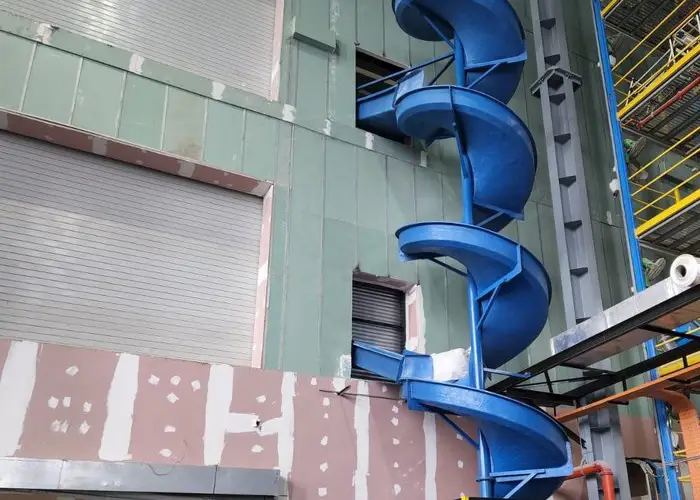
What Are Chute Conveyors?
A chute conveyor is a material handling system that transfers bulk materials or packaged products from one point to another using gravity or controlled flow. Instead of transporting materials on moving belts, a chute allows products to slide safely along a specially designed path.
FRP chute systems are engineered to withstand abrasion, moisture, chemicals, and harsh weather while maintaining consistent material flow.
These systems are widely used wherever bulk materials need to move safely and efficiently.
Why Choose FRP Chute Conveyors?
Traditional steel chutes suffer from corrosion, rust, heavy weight, and frequent maintenance. FRP solves many of these issues.
Key Benefits
Excellent Corrosion Resistance
FRP is highly resistant to acids, alkalis, chemicals, seawater, and moisture, making it ideal for aggressive industrial environments.
Lightweight Construction
Compared to steel, FRP components are significantly lighter, making transportation, installation, and maintenance easier.
High Strength
Despite being lightweight, FRP provides impressive structural strength capable of handling demanding industrial applications.
Low Maintenance
Unlike steel, FRP does not rust or require frequent painting, reducing operational costs.
Long Service Life
Properly designed FRP chute systems can operate efficiently for many years even under continuous industrial use.
Types of Chute Conveyors
Different industries require different chute designs depending on the material being handled.
Gravity Chute Conveyor
A gravity chute conveyor relies on gravity to move products without motors or additional power.
These systems are commonly used for:
- Warehouses
- Packaging facilities
- Distribution centers
- Parcel handling
- Manufacturing plants
Advantages include:
- Low operating costs
- Minimal maintenance
- Quiet operation
- Energy efficiency
Conveyor Transfer Chute
A conveyor transfer chute transfers materials from one conveyor belt to another while minimizing product degradation and dust generation.
These chutes are commonly installed:
- Between conveyors
- At crushers
- At screening plants
- Loading stations
- Transfer towers
FRP transfer chutes provide smooth surfaces that reduce friction and material build-up.
Conveyor Feed Chute
A conveyor feed chute regulates material entering a conveyor system.
Its purpose is to:
- Control material flow
- Reduce belt impact
- Prevent spillage
- Improve loading efficiency
Proper feed chute design increases conveyor life and reduces maintenance costs.
Head Chute Conveyor
A head chute conveyor is located at the discharge end of a conveyor belt.
It guides material into:
- Another conveyor
- Storage bins
- Crushers
- Hoppers
- Trucks
Using FRP at conveyor heads minimizes corrosion caused by continuous material discharge.
Discharge Chute Conveyor
A discharge chute conveyor controls the final direction of bulk materials.
Applications include:
- Cement plants
- Coal handling systems
- Fertilizer industries
- Mining operations
- Aggregate plants
Smooth FRP surfaces reduce blockages while improving flow consistency.
Chute Conveyor Applications
Modern industries depend on reliable material handling systems.
Common chute conveyor applications include:
Mining
Mining operations handle highly abrasive materials.
FRP chutes resist corrosion while providing long service life under harsh conditions.
Cement Industry
Cement plants use transfer chutes between crushers, silos, and conveyors.
FRP minimizes wear while reducing maintenance shutdowns.
Power Plants
Coal-fired power plants use chute systems for:
- Coal transfer
- Ash handling
- Material discharge
FRP improves durability in humid and corrosive environments.
Chemical Plants
Chemical processing requires corrosion-resistant equipment.
FRP offers excellent resistance to aggressive chemicals.
Food Processing
FRP’s smooth, hygienic surface makes it suitable for certain food and agricultural applications where corrosion resistance is essential.
Ports and Shipping
Bulk cargo terminals use FRP chute systems for:
- Grain
- Fertilizer
- Coal
- Minerals
- Salt
Their corrosion resistance makes them ideal for coastal environments.
Importance of Conveyor Chute Liners
Even durable chutes benefit from protective liners.
Conveyor chute liners help:
- Reduce abrasion
- Increase equipment life
- Improve material flow
- Lower maintenance costs
- Minimize downtime
FRP liners offer a balance of wear resistance and lightweight performance, especially in corrosive applications.
Conveyor Chute Inspection Doors
Routine maintenance is easier when chutes include conveyor chute inspection doors.
Benefits include:
- Easy internal inspection
- Faster maintenance
- Safer cleaning
- Reduced downtime
- Improved operational efficiency
Inspection doors allow maintenance teams to quickly access critical areas without dismantling the entire chute.
Conveyor Diverter Chute
A conveyor diverter chute directs materials toward different processing lines.
Industries use diverter chutes for:
- Product sorting
- Material distribution
- Loading multiple storage bins
- Process automation
FRP diverter chutes provide smooth operation with minimal maintenance.
Why FRP Outperforms Steel
| Feature | FRP | Steel |
|---|---|---|
| Corrosion Resistance | Excellent | Moderate |
| Weight | Lightweight | Heavy |
| Maintenance | Low | High |
| Rust | No | Yes |
| Chemical Resistance | Excellent | Limited |
| Installation | Easy | Difficult |
| Service Life | Long | Moderate |
Factors to Consider When Selecting an FRP Chute
Before choosing a chute system, evaluate:
- Material characteristics
- Capacity requirements
- Abrasion levels
- Chemical exposure
- Operating temperature
- Installation space
- Maintenance accessibility
- Required inspection doors
- Transfer height
- Material flow angle
A properly engineered chute improves efficiency and extends equipment life.
Best Practices for Maintaining FRP Chute Conveyors
Although FRP requires minimal maintenance, regular inspections are recommended.
Maintenance tips include:
- Inspect surfaces for wear.
- Clean accumulated material regularly.
- Check support structures.
- Examine inspection doors and seals.
- Verify fasteners remain secure.
- Replace worn liners when needed.
- Monitor material flow for blockages.
Preventive maintenance maximizes system reliability.
Frequently Asked Questions
What is a chute conveyor?
A chute conveyor is a gravity-based material handling system that transfers bulk materials or products between processing equipment efficiently.
Why use FRP chute instead of steel?
FRP is corrosion-resistant, lightweight, durable, and requires less maintenance than traditional steel chutes.
Where are gravity chute conveyors used?
They are commonly found in warehouses, mining operations, manufacturing plants, logistics centers, food processing facilities, and packaging industries.
What are conveyor chute liners used for?
They protect the chute from wear and abrasion while improving material flow and reducing maintenance.
Can FRP chutes be customized?
Yes. FRP chute systems can be designed to match specific material types, capacities, dimensions, and industrial requirements.
Conclusion
FRP chute conveyors have become a preferred solution for industries seeking reliable, corrosion-resistant, and low-maintenance material handling systems. Whether you require a gravity chute conveyor, conveyor transfer chute, conveyor feed chute, head chute conveyor, or discharge chute conveyor, FRP delivers exceptional durability and long-term value.
By incorporating features such as conveyor chute liners, conveyor chute inspection doors, and conveyor diverter chutes, businesses can improve operational efficiency, reduce downtime, and extend equipment life. As industrial operations continue to demand higher performance with lower maintenance, FRP chute systems remain a smart investment for efficient and dependable bulk material handling.